
High Protein Meal Plan for Weight Loss: 129 g Sample Day + PDF
August 3, 2026
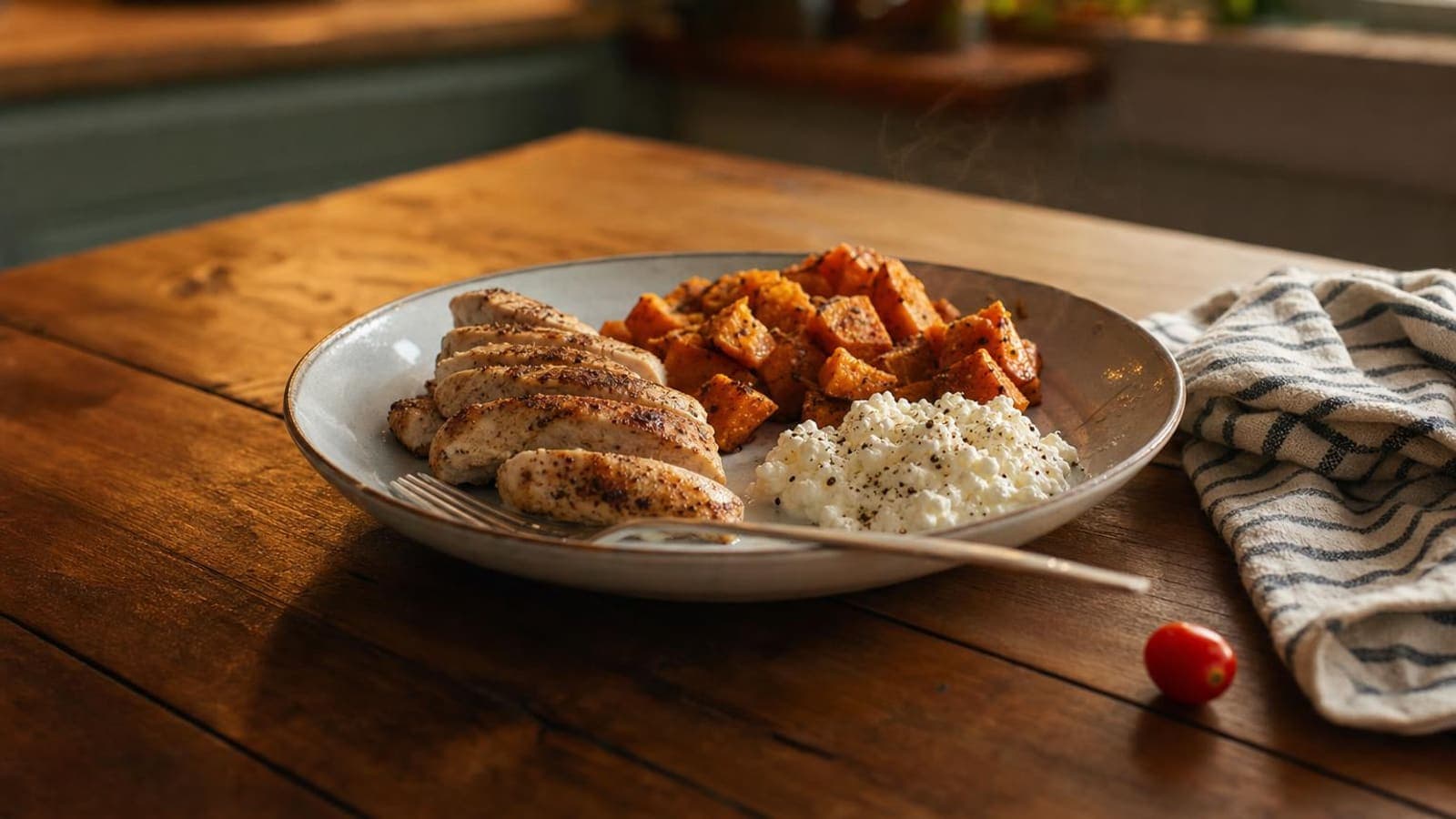
Here is a concrete day with approximately 129 g protein and 1,600 calories, taken from a saved MenuVita plan. The PDF contains the actual ingredient quantities and instructions.
Download the complete sample week (PDF)
This is the same document as our 1,600-calorie meal-plan example, not a separate protein-targeted product. This article examines its first day. The rest of the week has different protein totals.
A Sample Day With 129 g Protein
| Meal | Recipe in the PDF | Approx. calories | Protein |
|---|---|---|---|
| Breakfast | Goat Cheese and Ham Toast | 533 | 38.1 g |
| Lunch | Mexican Steak Bowl | 534 | 54.4 g |
| Dinner | Sweet Potato Chili | 533 | 36.6 g |
The unrounded recipe data totals 1,599.6 calories and 129.1 g protein. These figures describe the saved portions, not any serving of toast, steak or chili.
The download includes seven days, cooking instructions, ingredient quantities and a weekly grocery list. It is an omnivore example for one adult, with no dietary exclusions. Check each ingredient; this sample is not adapted to your allergies or health needs.
What Does “High Protein” Mean Here?
The description refers to this day's recipe-database total. For context, 129.1 g is about 1.84 g per kilogram for a 70 kg adult. That arithmetic does not make it a target for every reader.
The International Society of Sports Nutrition's position stand discusses approximately 1.4–2.0 g/kg/day for most exercising individuals. That is guidance for an exercising population, not a blanket prescription for everyone trying to lose weight. Health, activity and individual circumstances matter.
The Whole Week Does Not Have the Same Protein Total
The PDF contains three repeating menus:
- Days 1–3: approximately 129.1 g protein per day.
- Days 4–5: approximately 90.6 g protein per day.
- Days 6–7: approximately 125.6 g protein per day.
The weekly average is 117.1 g protein and 1,599.8 calories per day. We have not relabeled the entire week as a guaranteed 129 g/day plan.
MenuVita's standard generator targets calories and reports the resulting macros. It does not guarantee a specific protein target. We generated this sample first and described its results afterward.
Pair Protein With an Appropriate Calorie Intake
Do not choose 1,600 calories simply because this example uses it. Our calorie calculator provides an estimate. The NIDDK Body Weight Planner provides additional adult calorie-planning information.
The 1,800-calorie sample is another product example, not a recommendation to change your intake. A personalized MenuVita plan uses your submitted preferences and calculated calorie target, not individual dietary treatment.
FAQ
Is the PDF free?
Yes. No email address or payment is required. It is a fixed seven-day example, not a personalized plan.
Can I replace a meal and keep the same totals?
Not automatically. A different recipe or portion changes the nutrition and groceries. The PDF is static and does not recalculate substitutions. Nutrition values are estimates and can also vary with brands.
Are the photos exact portions?
No. Images are illustrative and may be AI-generated. Follow the written quantities rather than the apparent serving size in a picture.
General information, not medical advice. This sample is not intended for children, pregnancy, breastfeeding, or managing a medical condition. Ask a qualified healthcare professional for advice appropriate to your circumstances.